The Michigan Model: A New Approach to Financial Aid
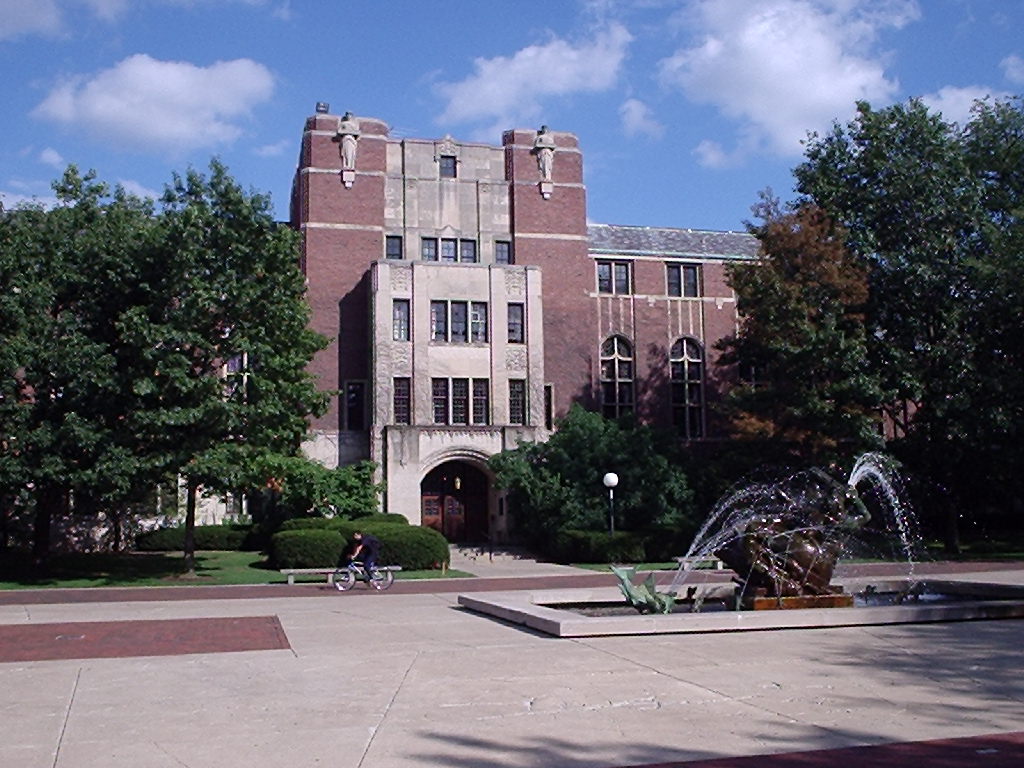
Earlier this summer, the University of Michigan unveiled the “Go Blue Guarantee,” its new financial aid program. Advocates say it could revolutionize college admissions for low-income students, as the guarantee promises to completely cover up to four years of tuition for undergraduates from Michigan whose families earn less than $65,000 annually. That number, by no … Read more


Obama, Trump, and the History of Presidential Relationships

On the morning of March 11, 1947, President Harry Truman typed a letter to former president Herbert Hoover. Truman’s letter thanked Hoover for his report on food shortages in Germany and Austria, Hoover’s latest contribution to post-World War II reconstruction efforts. Despite vast political differences, the two presidents fostered an outstanding professional relationship and an … Read more

Marine Le Pen’s Journey to Failure

            Fifteen years. Three election cycles. Five million, one-hundred and thirteen thousand, four hundred and forty-three more votes. When one compares Marine Le Pen’s 2017 electoral showing to that of her father, Jean-Marie Le Pen, in 2002, the end result—a decisive loss for the both of them—appears somewhat disheartening for … Read more

Fine Lines: Partisan Gerrymandering and the Two Party State

The American experiment began with a revolution. At its core was fair representation, the idea that individuals should be able to exercise control over their government. The Declaration of Independence expresses this idea, with Thomas Jefferson writing, “Governments are instituted among Men, deriving their just powers from the consent of the governed-That whenever any Form … Read more

Space Standoff: Uncertainty in Militarized Space

Space is dangerous and expensive. It’s also a mission-critical asset to a modern military force where precedence and collaboration between rivals is scant. National space programs are immensely expensive investments of capital and manpower. For all the private benefits a space program provides, military interest and nationalism have driven extraterrestrial innovation. Defense budgets are initially … Read more

The Rise of Income Segregation in Post-Recession America

Residential income segregation—the separation of residents by income and the isolation of neighborhoods both very rich and very poor—perpetuates income inequality. And it’s on the rise in the United States. Income segregation is both a cause and a consequence of income inequality. It’s a consequence in that economic inequality divides Americans into groups which then … Read more

Beyond Borders: Native Peoples and National Boundaries in the Age of the Wall

When Hon’mana Seukteoma recalls her childhood, she thinks of Lukeville, Arizona. Located just over two hours south of the state capital of Phoenix, this tiny Southern Arizona town is home to roughly 35 residents, thousands of organ-pipe cacti, and, most notably, a United States port of entry that connects Mexico’s Carretera Federal 8 to Arizona’s … Read more

Quality over Quantity: The New Challenge Facing Computer Science Education

“In the new economy, computer science isn’t an optional skill – it’s a basic skill, right along with the three “Rs.” President Obama made this bold declaration in January 2016, when he announced his Computer Science for All initiative, designed to expand computer science classes in public schools. While this presidential push marked the first … Read more

Fighting to Fail: Low Performance on Advanced Placement Exams

Every so often, stories of promising young students who exhibit extraordinary academic talent sweep the Internet; when a Naperville North student became the first in the world to receive a perfect score on the AP Physics exam, he was featured in the Chicago Tribune. Stories like this however, while incredibly impressive and inspiring, often ignore … Read more